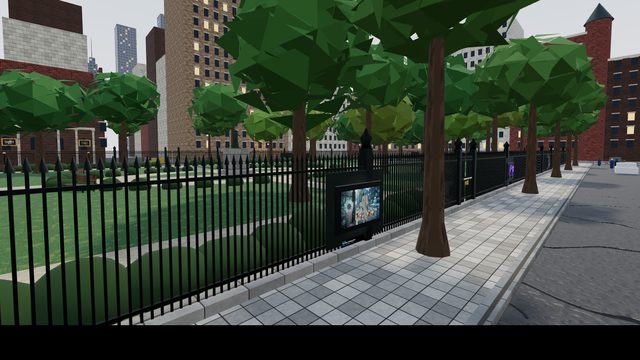
The last private park in Manhattan, two acres of gravel paths, planting and old trees behind a locked iron fence, with Edwin Booth on his pedestal in the middle. The New Yorkers hang on the railings facing the street, under the hotel awning and on the fronts of the clubs on Gramercy Park South. Only the houses round the square hold keys, and somewhere on this block one is waiting to be found: find it and the gate opens.
Samuel B. Ruggles created Gramercy Park in 1831, about two acres, enclosed by a fence in 1833. Since December 31, 1831 it has been held in common by the owners of the 39 surrounding structures, with two keys allocated to each original lot; in 2012 there were 383 numbered and coded keys, the Medeco locks are changed annually, and the Gramercy Park Hotel holds 12 keys. Edmond T. Quinn's statue of Edwin Booth was dedicated on November 13, 1918. The National Arts Club is at No. 15 Gramercy Park South in the Tilden mansion remodelled by Calvert Vaux, The Players at No. 16. The historic district was designated on September 20, 1966, and the park opens to the public on Christmas Eve.
Source · Gramercy Park, Wikipedia ↗
The locked iron fence with its spear points and gates, the gravel paths and planting, Edmond T. Quinn's statue of Edwin Booth, the National Arts Club in the Tilden mansion and The Players on Gramercy Park South, the Gramercy Park Hotel and its awning, 34 and 36 Gramercy Park East, the brownstones with iron porches on the west side, and the key. Mood: behind the railings, a key away. Everything is procedural geometry with painted surfaces; nothing is a scan or a photograph. The room is an interpretation, and it hangs the New Yorkers the census recorded at this place first.